The fascia revolution: What you need to know about your body’s hidden network
The fascia, a vast interconnected web of tissue that runs throughout the body, is finally being recognized as a key player in health, pain and movement. Cate Montana reports
For centuries, the fascia was considered mere packing material—a translucent film that anatomists stripped away to get to the “real” structures underneath: muscles, bones and organs. Medical textbooks barely mentioned it. Surgeons cut through it without a second thought.
But a revolution in understanding is underway. Researchers are discovering that fascia is not passive wrapping but an active, responsive tissue system that plays a central role in movement, posture, pain, proprioception and even immune function.
Fascia is a continuous web of connective tissue that envelops every muscle, bone, nerve, blood vessel and organ in the body. It creates a three-dimensional matrix that holds everything in place while allowing structures to glide smoothly against each other during movement.
Think of it as the body’s internal architecture—the scaffolding that gives shape and support to everything inside you. When healthy, fascia is supple, hydrated and elastic. When it becomes dehydrated, damaged or inflamed, it stiffens, thickens and restricts movement, often causing pain in areas far from the original injury.
The pain connection
One of the most significant discoveries about fascia is its role in chronic pain. The thoracolumbar fascia in the lower back, for example, is densely supplied with nerve endings—more than the underlying muscles. When this tissue becomes inflamed or thickened, it can generate significant pain signals.
Research published in Pain in 2019 found that people with chronic lower back pain had measurably thicker and stiffer thoracolumbar fascia than pain-free controls. The fascia had become fibrotic—scarred and rigid—reducing its ability to glide and distribute forces evenly.
This helps explain why so many people with chronic back pain have normal MRI scans showing no disc problems or structural abnormalities. The source of their pain isn’t in the bones or discs at all—it’s in the fascia, which conventional imaging doesn’t typically evaluate.
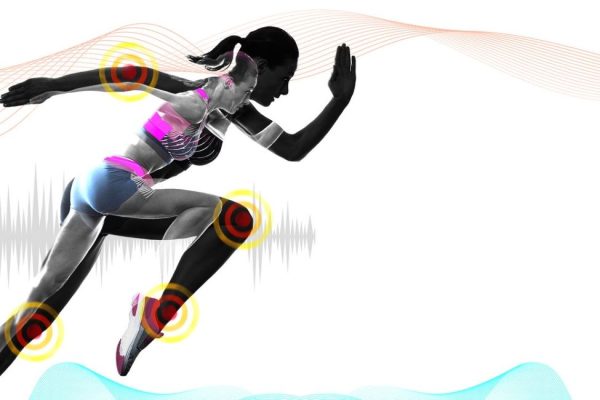
Fascia also connects distant parts of the body through what anatomist Thomas Myers calls “myofascial meridians” or “anatomy trains”—continuous lines of fascia and muscle that run from head to toe. This explains why a restriction in the foot can create pain in the knee, hip or even the shoulder.
Keeping fascia healthy
The good news is that fascia responds well to the right kind of movement and care. Here are evidence-based approaches to maintaining healthy fascia:
Movement variety. Fascia thrives on diverse, multidirectional movement. Repetitive patterns—like sitting at a desk or always running in a straight line—cause fascia to adapt by becoming stiffer in some areas and weaker in others. Activities like yoga, tai chi, swimming and dance provide the varied movement that keeps fascia supple.
Hydration. Fascia is roughly 70 percent water. When dehydrated, it becomes sticky and stiff. Adequate water intake throughout the day is essential for fascial health. Some researchers also recommend consuming foods rich in hyaluronic acid (bone broth, root vegetables) to support fascial hydration from within.
Foam rolling and myofascial release. Self-massage with foam rollers, therapy balls or manual pressure can help break up fascial adhesions and restore tissue glide. Research shows foam rolling before and after exercise reduces delayed-onset muscle soreness and improves range of motion.
Stretching—the right kind. Traditional static stretching held for 15–30 seconds primarily affects muscles. To reach fascia, longer holds of 2–5 minutes are needed, as practiced in yin yoga. This gives the collagen fibers time to slowly elongate and rehydrate.
Bouncing and elastic movement. Fascia stores and releases elastic energy, much like a spring. Activities that involve bouncing—jumping rope, running, plyometrics—train fascia to store energy efficiently, reducing the load on muscles and joints.
References
Pain, 2019; 160(5): 1018–1025
J Anat, 2012; 221(6): 507–517
J Bodyw Mov Ther, 2015; 19(4): 747–758